I absolutely love the World Cup.
I look forward to this so much because I can turn on the TV and watch soccer almost around the clock. And with the tournament's recent expansion, I'm an even bigger fan. There is something magical about watching smaller nations challenge powerhouse teams with enormous budgets.
Soccer has always held a special place in my life. I grew up playing, and it taught me confidence—not just in my athletic ability, but in what my body was capable of. I can still picture the 1999 U.S. Women's National Team winning the World Cup. That iconic celebration is burned into my memory and inspired an entire generation of girls, myself included.
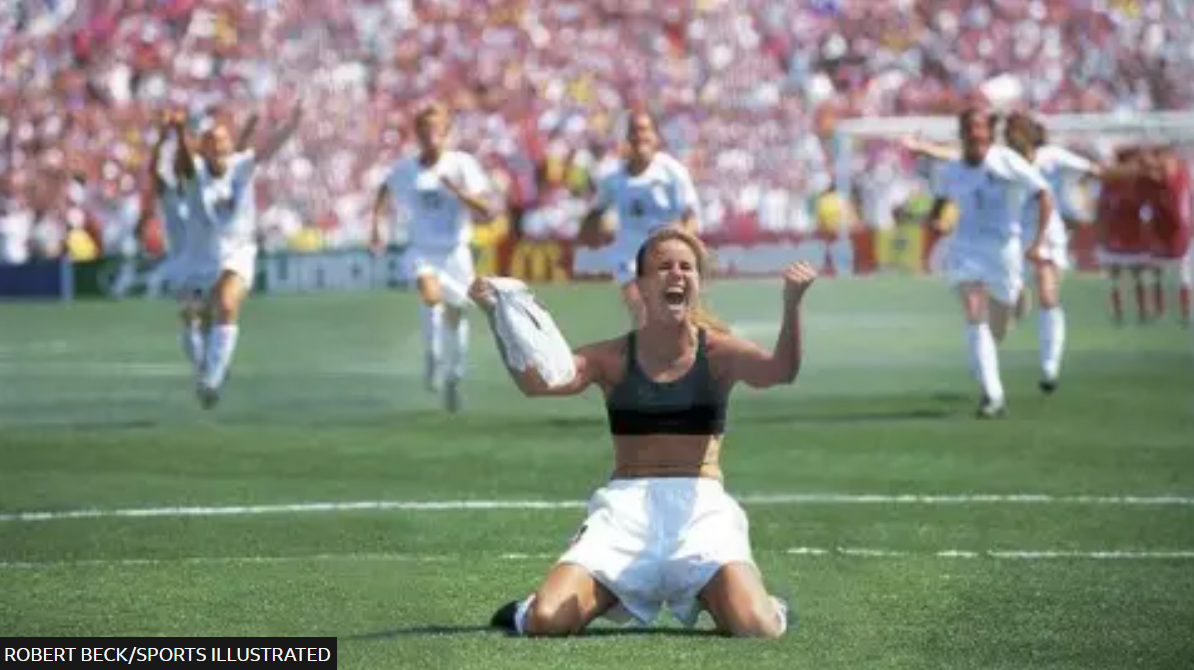
So, during all this soccer excitement, I thought it would be the perfect time to highlight something many people don't realize:
There isn't just one way to play soccer.
There are incredible adaptive versions of the sport that allow athletes with disabilities to compete at every level—from local recreation to international championships.
Blind Soccer is designed for athletes who are blind or have low vision. Players use a ball with bells inside so they can track it by sound, while goalkeepers are sighted and coaches help direct play from the sidelines. Communication becomes just as important as technical skill, creating a fast-paced and incredibly strategic game.
Amputee Soccer may be my favorite adaptive variation to introduce people to because the first reaction is usually, "Wait...how?" Field players with lower limb amputations compete using forearm crutches and without prosthetic legs, while goalkeepers have upper limb differences. If you've never watched a match, do yourself a favor and look one up. The athleticism is unbelievable. I also highly recommend the Move United podcast episode "This is the World's Game" (Redefining Disability, June 14), which shares the stories of athletes helping grow amputee soccer across the United States and reminds us that disability doesn't diminish competitiveness—it simply changes how the game is played.

Photo credit US Women’s National Amputee Soccer Team’s instagram
For athletes with cerebral palsy, stroke, or traumatic brain injury, CP Soccer modifies the game to accommodate different movement patterns while maintaining the competitive spirit of soccer. International competition continues to grow, and both men's and women's national teams represent the United States.
There is also Power Soccer, one of the fastest-growing adaptive sports. Played in power wheelchairs on a basketball court, Power Soccer was developed specifically for athletes who use power chairs. Specialized guards are attached to the chairs, allowing players to dribble, pass, and score. Watching the precision and strategy involved quickly changes what people think is possible in a wheelchair.
For athletes with intellectual disabilities, TOPSoccer provides inclusive recreational opportunities through local clubs across the country. The program focuses on fun, skill development, and creating a welcoming environment where everyone can participate.
Closer to home, there are opportunities throughout Colorado to get involved. The Fort Collins area has TOPSoccer programs through local youth soccer organizations, and adaptive recreation providers across Northern Colorado frequently partner with soccer clubs to offer inclusive programming. If you're looking for a place to start, reaching out to your local soccer club or adaptive recreation organization is often the quickest way to find a program near you.
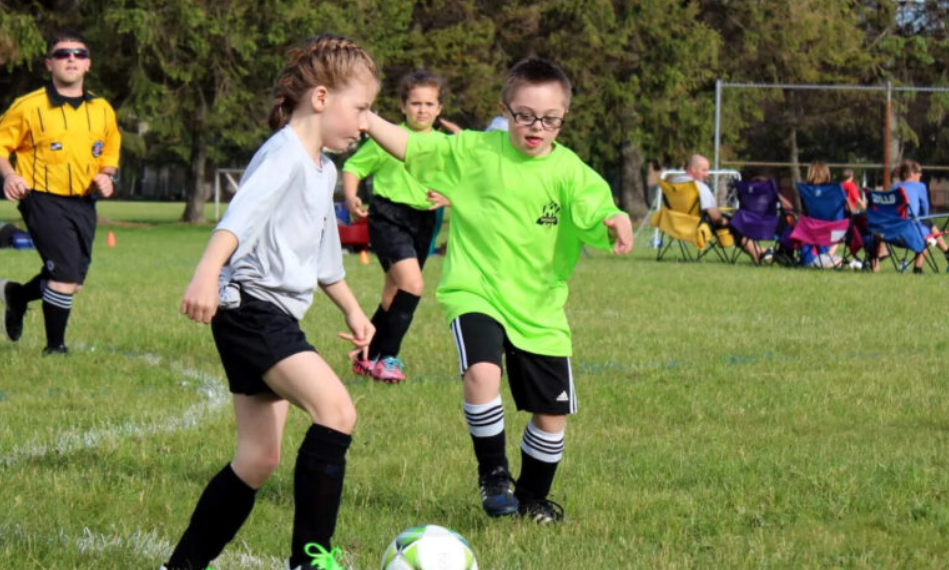
Photo credit: Ohio Soccer Association
One of the most exciting developments in recent years is U.S. Soccer's ADAPTandTHRIVE initiative. Rather than focusing on just one disability sport, the program brings together multiple adaptive disciplines—including Blind Soccer, CP Soccer, Deaf Soccer, Power Soccer, Amputee Soccer, and TOPSoccer—to grow participation, develop leaders, and ensure soccer truly becomes a game for everyone. It represents a huge step toward making inclusion a core part of the future of American soccer, not an afterthought.
So while you're enjoying the excitement of this summer's Men's World Cup, remember that soccer has many more stories to tell than the ones playing on primetime television.
And if you're looking for the real powerhouse of international soccer...I'll see you in 2027, when the U.S. Women's National Team goes after another World Cup title. Four stars already shine above that crest—the men are just trying to catch up.