My friend wasn’t done with questions. As a review, last week I got a call from a therapy friend because, as an accessibility consultant, I tend to be the one who gets asked about finding creative solutions to difficult problems. Last blog we discussed alternative ways to read books using voice commands. But today we are going to talk about their second problem, they wanted to help a patient with advanced muscular dystrophy find a way to move around her home independently without functional use of her head or limbs. She wants to be able to move around her house without having to rely on someone else to move her wheelchair for her.
This is not just about independence of movement, but about freedom. People who can be in charge of their own mobility have so many more freedoms. Freedom of time - they don’t have to wait on a helper but can move whenever works best for them. Freedom of exploration - they can go where they want to go to meet their needs or simply because they have a desire to do so. And often forgotten, freedom of choice - they can LEAVE a room or a place that they may feel is unsafe, where they don’t feel heard or understood, or simply because their needs are met. Movement is more than just getting from A to B, it involves accessing autonomy in all its forms.

Given the value of movement, this may sound like a straightforward goal until you start looking at the options. Most power wheelchairs use a joystick, but what happens when someone can't move their arms, legs, or head? How do we find a control system that works today and can adapt as their condition progresses?
This is where accessibility becomes a process, not a product.
Power wheelchairs can be configured with alternative controls, but the right option depends on what movements a person can reliably make and sustain.
Sip-and-puff controls allow someone to drive a wheelchair by sipping or blowing into a tube to send commands. This can be a useful option for people who cannot use their hands, but it requires an assessment of respiratory function, oral control, fatigue, and the ability to produce consistent signals.
Mouth-controlled joysticks offer another possibility. These controls allow a person to direct the wheelchair using movements of their mouth, lips, or jaw, depending on the specific device. Unlike sip-and-puff, which relies on air pressure, a mouth joystick requires enough controlled movement to steer. For someone with advanced muscular dystrophy, the key question is whether they have the necessary movement and whether it can be used comfortably and reliably without excessive fatigue.
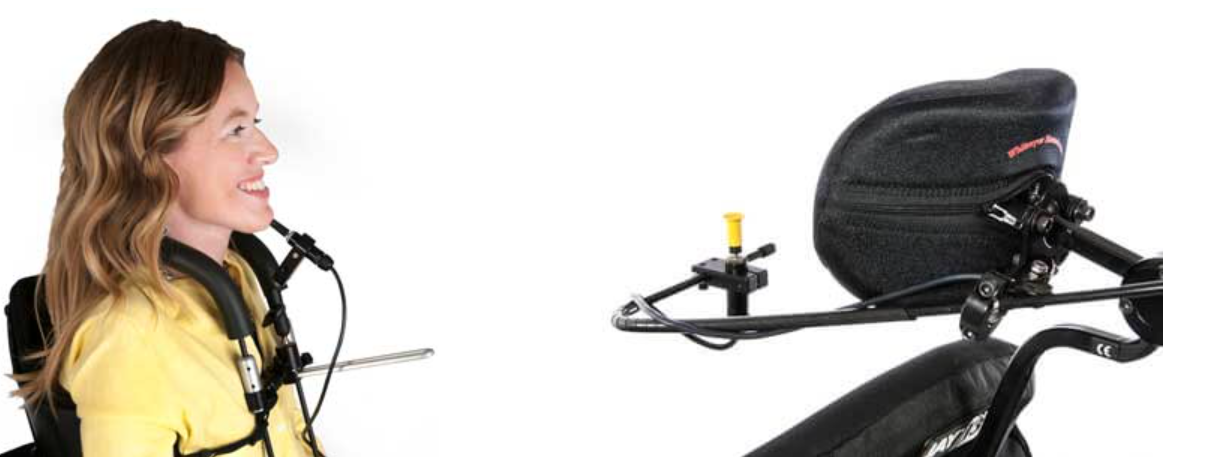
Chin Joystick Mount for Power Wheelchair courtesy of Sunrise Medical
There are also specialty switches and other alternative access systems. Researchers have explored tongue-operated technology, including systems that use tongue movements to control a computer or wheelchair. These approaches are promising, but research prototypes should not be confused with equipment that is routinely available for clinical prescription.
The important thing is not to assume one option will work—or rule one out—based on a diagnosis alone. A complex rehabilitation team and an Assistive Technology Professional (ATP) can assess the person's abilities, trial different controls, and work with wheelchair manufacturers to find an appropriate setup. They can also consider how the system might need to change as the person's function changes over time. It is also important to make sure these adaptions are compatible with your particular power wheelchair model/manufacturer.
The goal isn't simply to find a control that makes the chair move. It's to find the right match between the person's function, their goals, the technology, and the support available to maintain it. As therapists, that means working closely with the person, their family, equipment vendors, and the broader clinical team. It also means planning for change instead of waiting until the current system no longer works.
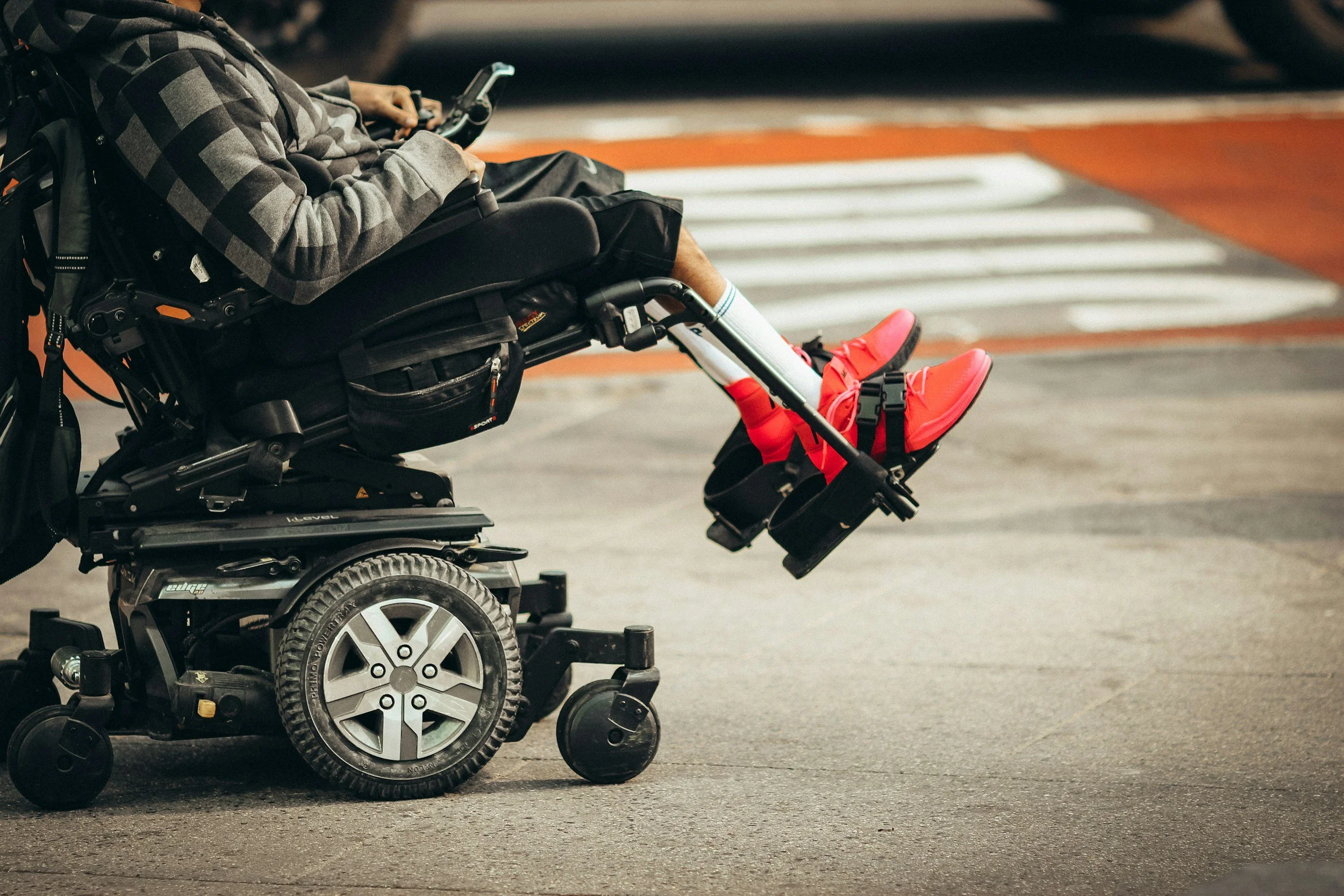
Because here's what I keep coming back to: this isn't just about getting to the bathroom. It's about freedom.
It's the independence to move into another room because you want to. It's being able to leave a space where you're uncomfortable, get closer to a window, or join a conversation without waiting for someone else to move you. When so much of your day already depends on other people, having control over where you go matters.
The best technology isn't necessarily the newest or most complicated. It's the technology that gives someone meaningful control over their own life, with a plan for adapting that control as their needs change.
That's why these evaluations matter. We're not just choosing equipment. We're helping someone maintain access to their home, their choices, and their independence.